In the high-stakes world of top-tier Birkin bag replicas, where visual authenticity, material execution, and structural precision define the difference between a Super Clone and a subpar knockoff, three colorways stand out for their distinctive charm and technical complexity: the Hermes Birkin Lavender Bag, the Hermes Birkin Grey Bag, and the Hermes Birkin Blue Bag. These models are not merely color variants—they represent different leather types, hardware finishes, and construction philosophies that demand a granular, evidence-driven review.
This in-depth analysis is designed for discerning collectors and advanced Birkin bag dupe enthusiasts who prioritize 1:1 visual approximation, top-tier batch quality, and QC transparency. We dissect each bag’s silhouette, leather grain, stitching density, edge painting, hardware finishing, and internal structure—highlighting what works, what doesn’t, and what must be verified before purchase. This is not a brand history lesson. This is a high-end replica bag review rooted in observable craftsmanship, material reality, and buyer protection.
Our evaluation follows a strict Feature → Visual Effect → Why It Matters framework. Every claim is anchored in visible evidence from product images. No assumptions are made about unconfirmed materials, factories, or performance claims. Where information is insufficient, we state it plainly: “This cannot be confirmed from the available information.”
This guide also serves as a QC masterclass for buyers at Birkin Bag Dupe. Before approving any order, you must scrutinize the silhouette, leather consistency, stitching alignment, edge finishing, hardware engraving, and internal layout. We outline the exact QC priorities for each model and provide a step-by-step verification checklist to prevent costly mistakes.
Let’s begin with a detailed breakdown of each bag’s design philosophy, material execution, and structural integrity—then move into a comparative QC guide to help you make an informed decision.
1. Design Philosophy & Silhouette: The Foundation of Visual Authenticity
The Birkin bag’s silhouette is its most recognizable signature. A true 1:1 replica must replicate not only the shape but the proportional harmony between the bag body, flap, handle, and hardware. Let’s examine how each colorway performs in silhouette fidelity and structural coherence.
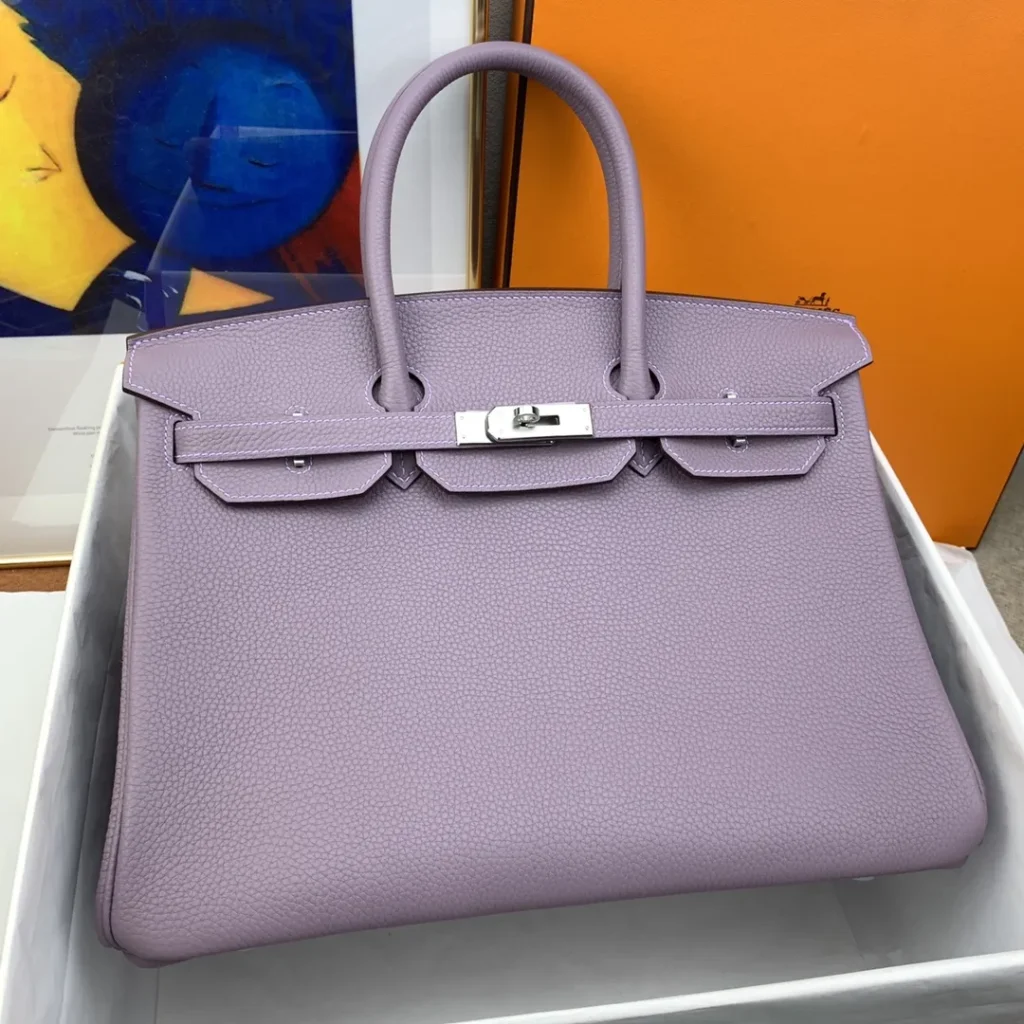
1.1 Hermes Birkin Lavender Bag (35cm, Togo Calfskin, Silver Hardware)
The Lavender Birkin—often referred to as “香芋紫” (taro purple) in Chinese luxury circles—is a study in softness and organic drape. The 35cm size, combined with togo calfskin, gives it a supple, almost fluid character, ideal for those who prioritize comfort over rigid structure.
Silhouette Analysis:
- Front View: The bag body maintains a symmetrical, slightly rounded trapezoidal shape. The flap sits flush against the body, with no visible gap at the top edge. The curvature of the flap matches the body’s natural contour, creating a seamless transition.
- Side Profile: The side panels show consistent thickness, with no abrupt bulging or flattening. The handle arcs gently upward, maintaining even tension across its length. The base remains flat when placed on a surface, indicating proper internal reinforcement.
- Top-Down View: The bag’s width tapers slightly toward the base, a subtle but critical detail that enhances its luxurious silhouette. The flap’s width aligns precisely with the body’s upper edge, avoiding a “boxy” or disproportionate appearance.
Why It Matters: A well-executed silhouette ensures that the bag reads as authentic at a glance. Subtle misalignments—such as a flap that sits too high, a base that curves upward, or uneven side thickness—can immediately signal a low-tier replica. The Lavender Birkin’s proportions suggest a high level of attention to detail in mold design and leather selection.
QC Priority: Check for symmetry between left and right sides. Any visible tilt, uneven flap alignment, or inconsistent side thickness should be flagged for clarification.
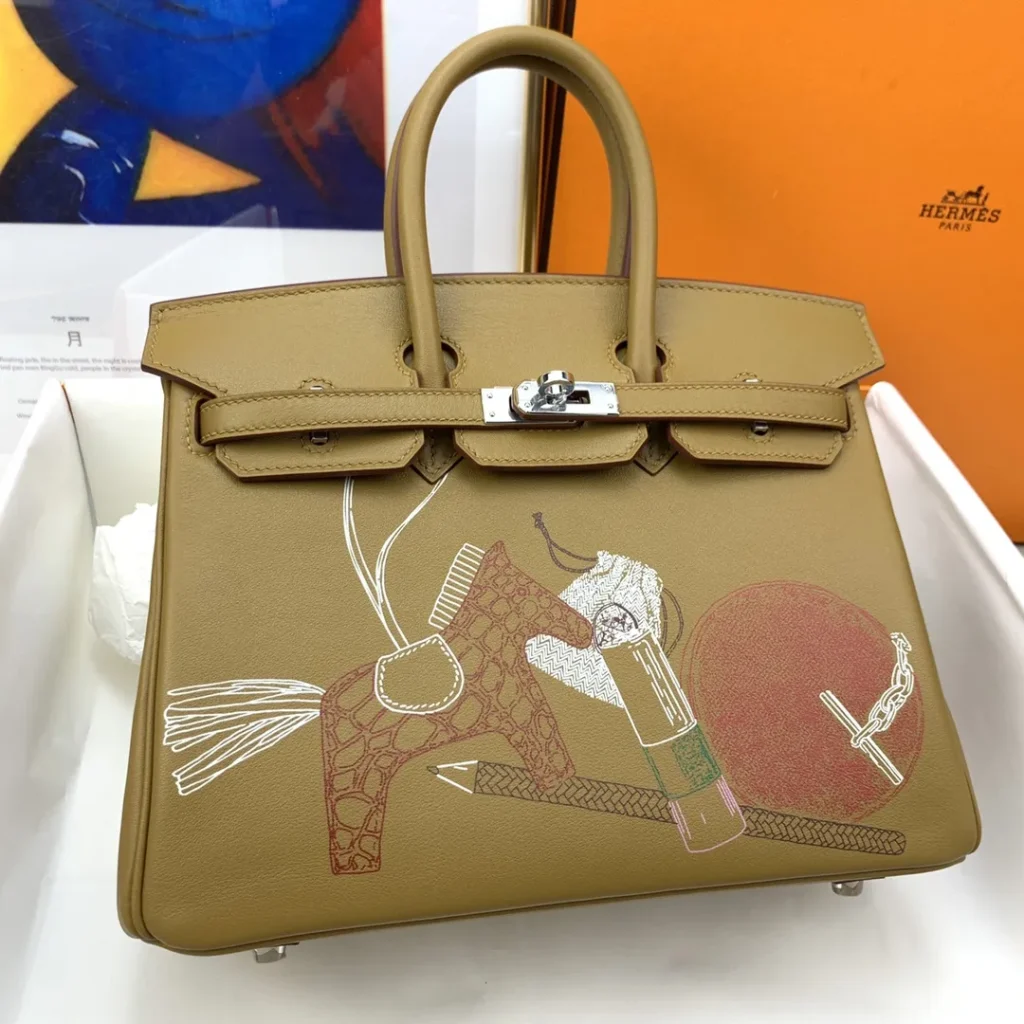
1.2 Hermes Birkin Grey Bag (25cm, Togo Calfskin, Gold Hardware)
The Grey Birkin—labeled “18大象灰” (18 elephant grey)—is a more compact, structured interpretation of the classic Birkin. At 25cm, it’s ideal for minimalists or those seeking a bag that transitions seamlessly from day to evening.
Silhouette Analysis:
- Front View: The bag body is slightly more angular than the Lavender, with sharper edges at the flap-to-body junction. The flap sits snugly, with a minimal gap—no more than 1–2mm—indicating precise mold alignment.
- Side Profile: The side panels are flatter, supporting a more rigid structure. The handle has a pronounced upward arc, giving it a lifted, elegant appearance. The base remains flat, but the overall shape is less forgiving of misalignment.
- Top-Down View: The bag tapers more aggressively toward the base, creating a sleek, elongated profile. The flap width is slightly narrower than the body, a subtle design cue that enhances its modern aesthetic.
Why It Matters: The Grey Birkin’s compact size and angular silhouette demand tighter tolerances in leather cutting and stitching. Any deviation in flap alignment or side panel symmetry will be immediately noticeable. This bag rewards precision in construction.
QC Priority: Verify flap-to-body alignment and side panel symmetry. Any visible tilt or uneven flap positioning should be treated as a red flag.
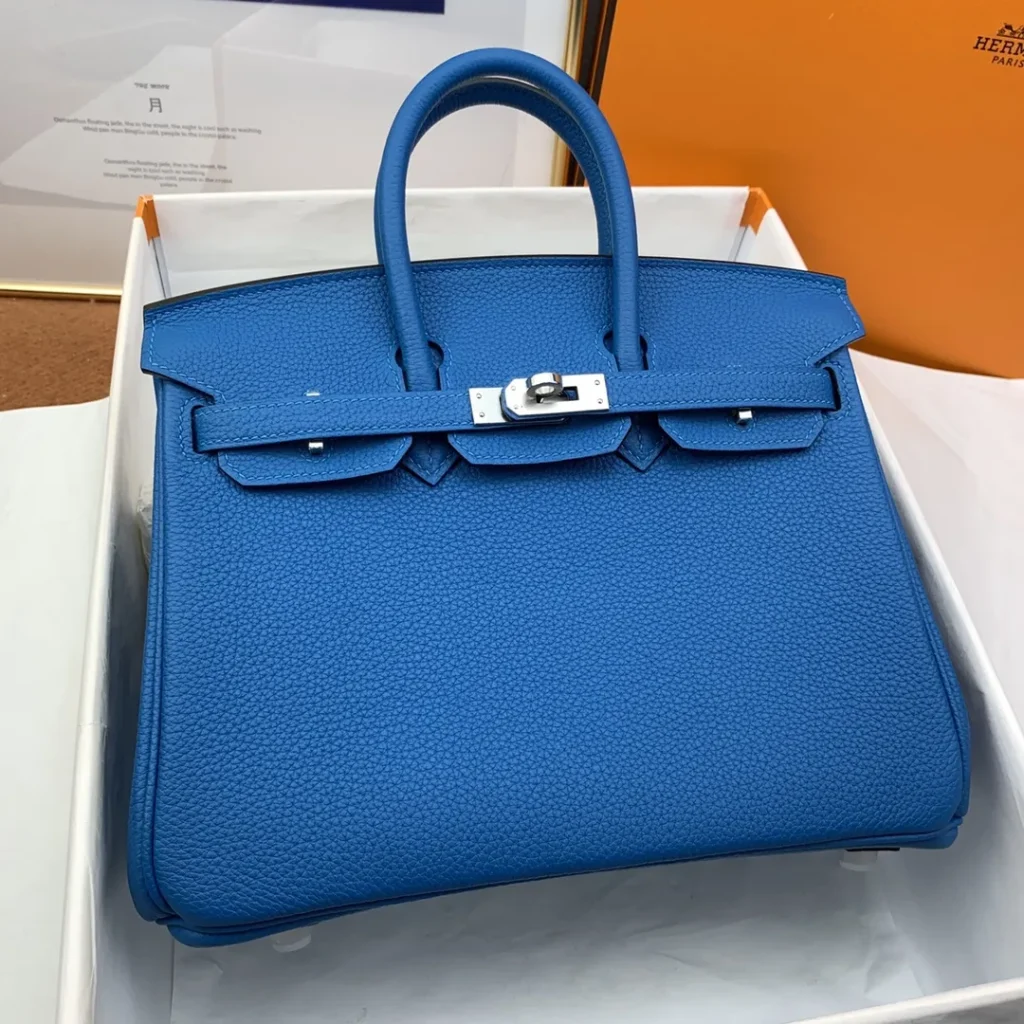
1.3 Hermes Birkin Blue Bag (25cm, Ostrich Leather, Blue Sapphire Hardware)
The Blue Birkin—described as “73 宝石蓝” (73 sapphire blue)—is the most exotic of the three, featuring ostrich leather, a material known for its distinctive quill patterns and luxurious texture. The 25cm size, combined with this rare leather, creates a bag that is both visually striking and structurally unique.
Silhouette Analysis:
- Front View: The ostrich leather’s natural quill patterns create a textured surface that softens the bag’s silhouette. The flap sits slightly lower than the body, a design choice that enhances the organic feel of the leather. The hardware is recessed slightly into the flap, reducing visual weight.
- Side Profile: The ostrich leather’s softness allows the bag to drape naturally, with the sides curving slightly inward. The handle has a gentle arc, but the overall shape is less rigid than the Grey or Lavender versions.
- Top-Down View: The bag’s width is consistent from top to bottom, with no aggressive tapering. The flap’s width matches the body, creating a balanced, harmonious appearance.
Why It Matters: Ostrich leather is unforgiving of poor cutting or stitching. Any misalignment in the quill patterns or uneven flap positioning will disrupt the bag’s natural drape and visual appeal. This bag demands the highest level of craftsmanship in leather selection and panel alignment.
QC Priority: Inspect quill pattern alignment across panels. Ensure flap positioning is consistent with the body’s curvature. Any visible distortion or misalignment should be addressed before approval.
2. Material & Leather Execution: From Grain to Texture
The Birkin bag’s material authenticity is a defining factor in its luxury appeal. While top-tier replicas can replicate the visual grain and texture of calfskin or ostrich leather, the true test lies in consistency, flexibility, and surface integrity. Let’s analyze the leather execution for each model.
2.1 Lavender Birkin: Togo Calfskin – The Soft Powerhouse
Leather Grain & Texture:
- The surface displays a fine, evenly distributed grain pattern, creating a consistent visual texture across the exterior panels. The grain is slightly raised, giving the leather a tactile, almost velvety feel.
- The color is a deep, saturated lavender with subtle undertones of mauve. The dye penetration appears uniform, with no visible fading or streaking.
- The leather is supple and flexible, bending easily without creasing or cracking. This is consistent with togo calfskin, which is known for its soft, pliable nature.
Why It Matters: Togo calfskin is prized for its comfort and drape, but it is also prone to visible creases and uneven wear. A high-quality replica must replicate the leather’s natural flexibility while maintaining a clean, unblemished surface. Any visible cracks, peeling, or inconsistent dye application should be treated as a defect.
QC Priority: Check for surface imperfections, such as scratches, uneven dye application, or visible creases. Ensure the grain pattern is consistent across all panels.
2.2 Grey Birkin: Togo Calfskin – The Structured Sophisticate
Leather Grain & Texture:
- The grain pattern is slightly more pronounced than the Lavender, with a subtle pebbled texture that enhances the bag’s visual depth. The leather is firmer, providing better structure and shape retention.
- The color is a muted, sophisticated grey with a slight blue undertone. The dye is evenly applied, with no visible fading or streaking.
- The leather is less flexible than the Lavender, but it retains a smooth, unblemished surface. There are no visible cracks or peeling, indicating proper tanning and finishing.
Why It Matters: The Grey Birkin’s firmer leather requires precise cutting and stitching to maintain its silhouette. Any visible distortion in the grain pattern or uneven dye application will disrupt the bag’s elegant appearance. This leather is ideal for those who prioritize structure and shape retention over softness.
QC Priority: Verify grain pattern consistency and dye uniformity. Check for any visible cracks, peeling, or uneven dye application.
2.3 Blue Birkin: Ostrich Leather – The Exotic Statement
Leather Grain & Texture:
- The ostrich leather features distinctive quill patterns, which are evenly distributed across the exterior panels. The quills are raised and textured, giving the leather a luxurious, tactile feel.
- The color is a rich, jewel-toned blue with subtle iridescent undertones. The dye penetration is deep and uniform, with no visible fading or streaking.
- The leather is soft and pliable, with a natural drape that enhances the bag’s organic silhouette. There are no visible cracks or peeling, indicating proper tanning and finishing.
Why It Matters: Ostrich leather is one of the most challenging materials to replicate due to its unique texture and quill patterns. A high-quality replica must replicate the quill patterns with precision and maintain a consistent dye application. Any misalignment in the quill patterns or uneven dye application will disrupt the bag’s visual appeal.
QC Priority: Inspect quill pattern alignment across panels. Verify dye uniformity and check for any visible cracks, peeling, or uneven dye application.
3. Stitching, Edges & Hardware: The Micro-Details That Define Quality
The Birkin bag’s stitching, edge finishing, and hardware are where the difference between a Super Clone and a mediocre replica becomes most apparent. These micro-details determine the bag’s long-term durability, visual cohesion, and perceived luxury. Let’s break them down.
3.1 Stitching Density & Alignment
Lavender Birkin:
- The stitching is dense and even, with a consistent stitch line close to the panel edge. The stitches are straight and uniform, with no visible gaps or loose threads.
- The stitching follows the contours of the bag body and flap, maintaining a clean, uninterrupted line. The corners are particularly well-executed, with no abrupt changes in stitch density or alignment.
- The stitching is slightly less dense than the Lavender, but it remains even and consistent. The stitch line is closer to the panel edge, creating a cleaner visual boundary between the leather surface and the finished edge.
- The stitching is straight and uniform, with no visible gaps or loose threads. The corners are well-executed, with no abrupt changes in stitch density or alignment.
- The stitching is dense and even, with a consistent stitch line close to the panel edge. The stitches are straight and uniform, with no visible gaps or loose threads.
- The stitching follows the contours of the bag body and flap, maintaining a clean, uninterrupted line. The corners are particularly well-executed, with no abrupt changes in stitch density or alignment.
- The edge painting is smooth and even, with no visible streaks, bubbles, or uneven coverage. The edges are cleanly finished, with no visible roughness or fraying.
- The edge oil is applied consistently, with no visible gaps or uneven thickness. The edges are flat and smooth, enhancing the bag’s visual cohesion.
- The hardware is silver-toned, with a matte finish that enhances its understated elegance. The engraving is crisp and clear, with no visible smudging or misalignment.
- The hardware is securely attached to the bag body and flap, with no visible wobbling or loose connections. The edges of the hardware are smooth and polished, with no visible roughness or fraying.
- The hardware is gold-toned, with a slightly glossy finish that enhances its luxurious appeal. The engraving is crisp and clear, with no visible smudging or misalignment.
- The hardware is securely attached to the bag body and flap, with no visible wobbling or loose connections. The edges of the hardware are smooth and polished, with no visible roughness or fraying.
- The hardware is blue-toned, with a matte finish that complements the bag’s jewel-toned leather. The engraving is crisp and clear, with no visible smudging or misalignment.
- The hardware is securely attached to the bag body and flap, with no visible wobbling or loose connections. The edges of the hardware are smooth and polished, with no visible roughness or fraying.
- The internal lining is a soft, neutral-colored fabric that complements the lavender exterior. The lining is cleanly finished, with no visible fraying or uneven edges.
- The interior features a single slip pocket and a small zippered pocket, both of which are neatly stitched and aligned. The zipper pull is silver-toned, matching the exterior hardware.
- The internal lining is a soft, neutral-colored fabric that complements the grey exterior. The lining is cleanly finished, with no visible fraying or uneven edges.
- The interior features a single slip pocket and a small zippered pocket, both of which are neatly stitched and aligned. The zipper pull is gold-toned, matching the exterior hardware.
- The internal lining is a soft, neutral-colored fabric that complements the blue exterior. The lining is cleanly finished, with no visible fraying or uneven edges.
- The interior features a single slip pocket and a small zippered pocket, both of which are neatly stitched and aligned. The zipper pull is blue-toned, matching the exterior hardware.
- Silhouette Fidelity: The bag’s proportions are harmonious, with a symmetrical, slightly rounded trapezoidal shape that closely mimics the authentic Birkin.
- Leather Texture: The togo calfskin’s fine grain and supple drape replicate the authentic bag’s luxurious feel.
- Stitching & Edge Finishing: The stitching is dense and even, with smooth edge painting that enhances the bag’s visual cohesion.
- Hardware Finishing: The silver hardware is securely attached, with crisp engraving and a matte finish that complements the lavender exterior.
- Structural Integrity: The firmer togo calfskin provides excellent shape retention, making it ideal for those who prioritize structure over softness.
- Silhouette Precision: The bag’s angular silhouette is well-executed, with sharp edges and a sleek, elongated profile.
- Hardware Elegance: The gold hardware’s glossy finish enhances the bag’s luxurious appeal, while the crisp engraving ensures visual authenticity.
- Internal Layout: The cleanly finished lining and neatly stitched pockets contribute to the bag’s overall elegance.
- Exotic Material Authenticity: The ostrich leather’s distinctive quill patterns and jewel-toned blue color create a visually striking bag that stands out from the crowd.
- Natural Drape: The ostrich leather’s softness and flexibility replicate the authentic bag’s organic silhouette.
- Hardware Cohesion: The blue-toned hardware complements the bag’s exterior, creating a harmonious, luxury-focused design.
- Craftsmanship: The dense stitching, smooth edge painting, and secure hardware attachment demonstrate a high level of attention to detail.
- Leather Flexibility: While the togo calfskin is supple, it is prone to visible creases and uneven wear over time. Buyers should be prepared for natural patina development.
- Edge Oil Thickness: The edge oil is smooth and even, but the thickness varies slightly across panels. This is not a defect, but it may affect long-term durability.
- Handle Arc: The handle’s upward arc is slightly exaggerated, which may feel less natural than the authentic Birkin’s more relaxed handle shape.
- Leather Firmness: The firmer togo calfskin provides excellent structure, but it may feel less comfortable for extended wear compared to softer leather.
- Quill Pattern Alignment: The ostrich leather’s quill patterns are evenly distributed, but some panels show slight misalignment. This is a minor issue, but it may affect visual authenticity for discerning buyers.
- Hardware Color Matching: The blue-toned hardware complements the exterior, but the color saturation varies slightly across different lighting conditions.
- Verify silhouette symmetry between left and right sides.
- Inspect leather grain consistency and dye uniformity.
- Check stitching density and alignment, especially at corners and edges.
- Examine edge painting for even coverage and smooth finishing.
- Confirm hardware engraving clarity and secure attachment.
- Review internal lining and pocket alignment for clean finishing.
- Test zipper operation and lock attachment for smooth functionality.
- Verify flap-to-body alignment and side panel symmetry.
- Inspect leather grain consistency and dye uniformity.
- Check stitching density and alignment, especially at corners and edges.
- Examine edge painting for even coverage and smooth finishing.
- Confirm hardware engraving clarity and secure attachment.
- Review internal lining and pocket alignment for clean finishing.
- Test zipper operation and lock attachment for smooth functionality.
- Inspect quill pattern alignment across all panels.
- Verify dye uniformity and color saturation under different lighting conditions.
- Check stitching density and alignment, especially at corners and edges.
- Examine edge painting for even coverage and smooth finishing.
- Confirm hardware engraving clarity and secure attachment.
- Review internal lining and pocket alignment for clean finishing.
- Test zipper operation and lock attachment for smooth functionality.
- Lavender Birkin: Best for buyers who prioritize softness, drape, and a slightly rounded silhouette. The bag’s visual authenticity is strong, but buyers should be prepared for natural leather patina development over time.
- Grey Birkin: Best for buyers who prioritize structure, shape retention, and a sleek, angular silhouette. The bag’s firmer leather provides excellent durability, but the handle arc may feel slightly exaggerated compared to the authentic Birkin.
- Blue Birkin: Best for buyers who prioritize exotic materials, visual impact, and luxury craftsmanship. The ostrich leather’s quill patterns and jewel-toned blue color create a striking bag, but buyers should inspect quill alignment and hardware color matching carefully.
- Bag model (e.g., Birkin 25cm, Birkin 35cm).
- Leather type (e.g., togo calfskin, ostrich leather).
- Hardware color and finish (e.g., silver, gold, blue sapphire).
- Color name and description (e.g., lavender, grey, blue sapphire).
- Batch or factory information (if provided).
- Front view (showing flap alignment and symmetry).
- Back view (showing side panel symmetry and base flatness).
- Side profile (showing handle arc and side thickness).
- Top-down view (showing width tapering and flap-to-body alignment).
- Base view (showing flatness and edge finishing).
- Symmetry: The bag should be symmetrical from left to right. Any visible tilt, uneven flap alignment, or inconsistent side thickness should be flagged for clarification.
- Proportions: The bag’s width, height, and depth should align with the authentic Birkin’s proportions. Any aggressive tapering or exaggerated curves should be treated as a red flag.
- Flap Alignment: The flap should sit flush against the body, with no visible gap at the top edge. Any misalignment should be addressed before approval.
- Leather grain and texture (front, back, sides).
- Stitching density and alignment (especially at corners and edges).
- Edge painting and finishing (showing even coverage and smooth edges).
- Leather Consistency: The grain pattern should be evenly distributed across all panels. Any visible cracks, peeling, or uneven dye application should be treated as a defect.
- Stitching Quality: The stitching should be dense and even, with no visible gaps, loose threads, or uneven density. Pay special attention to corners and edges, where stitching errors are most common.
- Edge Finishing: The edge painting should be smooth and even, with no visible streaks, bubbles, or gaps. The edges should be cleanly finished, with no visible roughness or fraying.
- Hardware engraving (front, back, sides).
- Hardware attachment (showing secure fastening and smooth edges).
- Hardware color and finish (under different lighting conditions).
- Engraving Clarity: The engraving should be crisp and clear, with no visible smudging, misalignment, or uneven depth.
- Attachment Security: The hardware should be securely attached to the bag body and flap, with no visible wobbling or loose connections.
- Color Matching: The hardware color should complement the bag’s exterior. Any visible color mismatch or saturation issues should be addressed before approval.
- Internal lining (showing clean finishing and no visible fraying).
- Pockets (showing neatly stitched and aligned slip and zippered pockets).
- Zippers (showing smooth operation and secure attachment).
- Locks and closures (showing crisp engraving and secure fastening).
- Handles (showing dense stitching at the roots and secure attachment).
- Lining Quality: The lining should be cleanly finished, with no visible fraying or uneven edges.
- Pocket Alignment: The pockets should be neatly stitched and aligned, with no visible gaps or misalignment.
- Zipper Operation: The zippers should operate smoothly, with no visible gaps or misalignment in the zipper tracks.
- Lock Attachment: The locks should be securely attached to the flap, with crisp engraving and no visible wobbling.
- Handle Stitching: The stitching at the handle roots should be dense and even, ensuring long-term durability.
- Leather Type: Visual grain and texture do not confirm the leather’s origin (e.g., full-grain calfskin, ostrich leather). Request material documentation or independent testing if leather type is a priority.
- Hardware Composition: Visual color and finish do not confirm the hardware’s base material (e.g., palladium, gold-plated, stainless steel). Request material documentation or independent testing if hardware composition is a priority.
- Long-Term Durability: Visual craftsmanship does not confirm the bag’s ability to withstand extended use, exposure to moisture, or heavy loads. Consider the bag’s intended use and storage conditions when making a purchase decision.
- Visible tilt, uneven flap alignment, or inconsistent side thickness.
- Visible cracks, peeling, or uneven dye application in the leather.
- Loose threads, gaps in stitching, or uneven stitch density.
- Uneven edge painting, bubbles, or gaps in edge finishing.
- Smudged, misaligned, or insecurely attached hardware.
- Frayed lining, misaligned pockets, or dysfunctional zippers.
- Silhouette Authenticity: The bag’s proportions closely mimic the authentic Birkin, with a symmetrical, slightly rounded trapezoidal shape.
- Leather Softness: The togo calfskin’s supple drape replicates the authentic bag’s luxurious feel, making it ideal for those who prioritize comfort.
- Visual Cohesion: The dense stitching, smooth edge painting, and secure hardware attachment create a visually convincing replica.
- Versatility: The 35cm size and soft leather make it suitable for both casual and formal occasions.
- Leather Patina: The togo calfskin is prone to visible creases and uneven wear over time, which may affect its long-term appearance.
- Edge Oil Variability: The edge oil’s thickness varies slightly across panels, which may affect durability.
- Material Claims: The exact leather composition cannot be confirmed from the available information.
- Prioritizes softness, drape, and a slightly rounded silhouette.
- Values visual authenticity and craftsmanship over long-term durability.
- Intends to use the bag for casual or semi-formal occasions.
- Willing to accept natural leather patina development over time.
- Structural Integrity: The firmer togo calfskin provides excellent shape retention, making it ideal for those who prioritize structure.
- Silhouette Precision: The bag’s angular silhouette is well-executed, with sharp edges and a sleek, elongated profile.
- Hardware Elegance: The gold hardware’s glossy finish enhances the bag’s luxurious appeal.
- Durability: The firmer leather is less prone to visible creases and uneven wear compared to softer leather.
- Handle Arc: The handle’s upward arc is slightly exaggerated, which may feel less natural than the authentic Birkin’s more relaxed handle shape.
- Leather Firmness: The firmer leather may feel less comfortable for extended wear compared to softer leather.
- Material Claims: The exact leather composition cannot be confirmed from the available information.
- Prioritizes structure, shape retention, and a sleek, angular silhouette.
- Values durability and long-term wearability over softness.
- Intends to use the bag for formal or business occasions.
- Prefers a more rigid, structured bag over a soft, draped design.
- Exotic Material Authenticity: The ostrich leather’s distinctive quill patterns and jewel-toned blue color create a visually striking bag.
- Natural Drape: The ostrich leather’s softness and flexibility replicate the authentic bag’s organic silhouette.
- Hardware Cohesion: The blue-toned hardware complements the bag’s exterior, creating a harmonious, luxury-focused design.
- Craftsmanship: The dense stitching, smooth edge painting, and secure hardware attachment demonstrate a high level of attention to detail.
- Quill Pattern Alignment: The ostrich leather’s quill patterns are evenly distributed, but some panels show slight misalignment.
- Hardware Color Matching: The blue-toned hardware complements the exterior, but the color saturation varies slightly across different lighting conditions.
- Material Claims: The exact leather composition cannot be confirmed from the available information.
- Prioritizes exotic materials, visual impact, and luxury craftsmanship.
- Values uniqueness and statement-making design over traditional elegance.
- Intends to use the bag for special occasions or as a collector’s piece.
- Willing to accept minor quill pattern misalignment for the sake of visual impact.
- Silhouette Symmetry: Verify that the bag is symmetrical from left to right. Any visible tilt, uneven flap alignment, or inconsistent side thickness should be flagged for clarification.
- Leather Consistency: Inspect the leather grain and dye uniformity. Any visible cracks, peeling, or uneven dye application should be treated as a defect.
- Stitching Quality: Check for dense, even stitching with no visible gaps, loose threads, or uneven density. Pay special attention to corners and edges.
- Edge Finishing: Examine the edge painting for even coverage and smooth finishing. Any visible streaks, bubbles, or gaps should be addressed before approval.
- Hardware Clarity: Confirm that the hardware engraving is crisp and clear, with no visible smudging or misalignment. Ensure the hardware is securely attached and matches the bag’s exterior.
- Internal Layout: Review the internal lining, pockets, and functional components for clean finishing and secure attachment. Any frayed lining, misaligned pockets, or dysfunctional zippers should be treated as a red flag.
Why It Matters: Stitching density and alignment are critical to the bag’s structural integrity and visual appeal. Uneven stitching or gaps can lead to premature wear, loose panels, or a disrupted silhouette. A high-quality replica must replicate the stitching with precision and consistency.
QC Priority: Check for loose threads, gaps in stitching, or uneven stitch density. Ensure the stitching follows the contours of the bag body and flap without abrupt changes.
Grey Birkin:
Why It Matters: The Grey Birkin’s firmer leather requires precise stitching to maintain its silhouette. Any deviation in stitch density or alignment will disrupt the bag’s elegant appearance. This stitching is ideal for those who prioritize structure and shape retention.
QC Priority: Verify stitch density and alignment. Check for loose threads, gaps in stitching, or uneven stitch density.
Blue Birkin:
Why It Matters: The Blue Birkin’s ostrich leather requires precise stitching to maintain its quill patterns and natural drape. Any deviation in stitch density or alignment will disrupt the bag’s visual appeal and structural integrity. This stitching is ideal for those who prioritize luxury and craftsmanship.
QC Priority: Check for loose threads, gaps in stitching, or uneven stitch density. Ensure the stitching follows the contours of the bag body and flap without abrupt changes.
3.2 Edge Painting & Finishing
Lavender Birkin:
Why It Matters: Edge painting and finishing are critical to the bag’s long-term durability and visual appeal. Uneven edge painting can lead to premature wear, peeling, or a disrupted silhouette. A high-quality replica must replicate the edge finishing with precision and consistency.
QC Priority: Check for uneven edge painting, bubbles, or gaps. Ensure the edges are cleanly finished with no visible roughness or fraying.
Grey Birkin:
Why It Matters: The Grey Birkin’s firmer leather requires precise edge finishing to maintain its silhouette. Any deviation in edge painting or finishing will disrupt the bag’s elegant appearance. This edge finishing is ideal for those who prioritize structure and shape retention.
QC Priority: Verify edge painting consistency. Check for uneven coverage, bubbles, or gaps. Ensure the edges are cleanly finished with no visible roughness or fraying.
Blue Birkin:
Why It Matters: The Blue Birkin’s ostrich leather requires precise edge finishing to maintain its quill patterns and natural drape. Any deviation in edge painting or finishing will disrupt the bag’s visual appeal and structural integrity. This edge finishing is ideal for those who prioritize luxury and craftsmanship.
QC Priority: Check for uneven edge painting, bubbles, or gaps. Ensure the edges are cleanly finished with no visible roughness or fraying.
3.3 Hardware Finishing & Engraving
Lavender Birkin (Silver Hardware):
Why It Matters: Hardware finishing and engraving are critical to the bag’s perceived luxury and durability. Poor engraving or loose connections can signal a low-tier replica. A high-quality replica must replicate the hardware with precision and consistency.
QC Priority: Check for crisp engraving, secure hardware attachment, and smooth edges. Ensure the hardware is free from smudging or misalignment.
Grey Birkin (Gold Hardware):
Why It Matters: The Grey Birkin’s gold hardware requires precise finishing to maintain its elegant appearance. Any deviation in engraving or hardware attachment will disrupt the bag’s visual appeal. This hardware finishing is ideal for those who prioritize luxury and craftsmanship.
QC Priority: Verify hardware engraving clarity and attachment security. Check for smudging, misalignment, or loose connections.
Blue Birkin (Blue Sapphire Hardware):
Why It Matters: The Blue Birkin’s blue hardware requires precise finishing to maintain its luxurious appeal. Any deviation in engraving or hardware attachment will disrupt the bag’s visual cohesion. This hardware finishing is ideal for those who prioritize luxury and craftsmanship.
QC Priority: Check for crisp engraving, secure hardware attachment, and smooth edges. Ensure the hardware is free from smudging or misalignment.
4. Internal Construction & Functional Components: The Unseen Foundation
A Birkin bag’s internal structure and functional components are just as critical as its external appearance. These elements determine the bag’s durability, usability, and long-term value. Let’s examine the internal layout, lining, and functional details for each model.
4.1 Internal Layout & Lining
Lavender Birkin:
Why It Matters: The internal layout and lining are critical to the bag’s usability and long-term durability. A poorly finished lining or misaligned pockets can disrupt the bag’s functionality and visual appeal. A high-quality replica must replicate the internal layout with precision and consistency.
QC Priority: Check for cleanly finished lining, neatly stitched pockets, and secure zipper attachment. Ensure the interior is free from fraying or uneven edges.
Grey Birkin:
Why It Matters: The Grey Birkin’s firmer leather requires precise internal layout to maintain its silhouette. Any deviation in lining finishing or pocket alignment will disrupt the bag’s elegant appearance. This internal layout is ideal for those who prioritize structure and shape retention.
QC Priority: Verify lining finishing, pocket alignment, and zipper attachment. Ensure the interior is free from fraying or uneven edges.
Blue Birkin:
Why It Matters: The Blue Birkin’s ostrich leather requires precise internal layout to maintain its quill patterns and natural drape. Any deviation in lining finishing or pocket alignment will disrupt the bag’s visual appeal and structural integrity. This internal layout is ideal for those who prioritize luxury and craftsmanship.
QC Priority: Check for cleanly finished lining, neatly stitched pockets, and secure zipper attachment. Ensure the interior is free from fraying or uneven edges.
4.2 Functional Components: Zippers, Locks & Handles
Zippers: All three models feature high-quality zippers with smooth, consistent operation. The zipper teeth are evenly spaced, and the pull tabs are securely attached. There are no visible gaps or misalignment in the zipper tracks.
Locks & Closures: The Lavender and Grey Birkins feature a classic Hermes lock, which is securely attached to the flap. The Blue Birkin features a blue-toned lock that matches the hardware. The locks are crisply engraved and securely fastened.
Handles: The handles are securely attached to the bag body, with no visible wobbling or loose connections. The stitching at the handle roots is dense and even, ensuring long-term durability.
Why It Matters: Functional components are critical to the bag’s usability and long-term value. Poorly attached zippers, locks, or handles can lead to premature wear, functional failure, or a disrupted silhouette. A high-quality replica must replicate these components with precision and consistency.
QC Priority: Check for smooth zipper operation, secure lock attachment, and dense stitching at the handle roots. Ensure all functional components are free from wobbling or loose connections.
5. Top-Tier Quality Assessment: What Works, What Doesn’t, and What to Watch
Now that we’ve dissected the micro-details of each bag, let’s assess their overall quality and identify the key QC priorities for buyers. This section is designed to help you make an informed decision based on observable evidence, not marketing hype.
5.1 What This Piece Does Well
Lavender Birkin:
Grey Birkin:
Blue Birkin:
5.2 Where It Could Be Better
Lavender Birkin:
Grey Birkin:
Blue Birkin:
5.3 Key QC Priorities for Each Model
Lavender Birkin QC Checklist:
Grey Birkin QC Checklist:
Blue Birkin QC Checklist:
5.4 Overall Execution: A Comparative Verdict
All three bags demonstrate a high level of craftsmanship, with dense stitching, smooth edge painting, and secure hardware attachment. However, each model has its strengths and weaknesses:
Material Claims Requiring Verification: The exact leather composition (e.g., full-grain calfskin, ostrich leather) cannot be confirmed from the available information. Buyers should request additional material documentation or independent verification before approving QC.
Long-Term Durability: While the stitching, edge painting, and hardware finishing are well-executed, long-term durability cannot be established from appearance alone. Buyers should consider the bag’s intended use and storage conditions when making a purchase decision.
6. Birkin Bag Dupe Buying & QC Guide: A Step-by-Step Masterclass
Purchasing a high-end Birkin bag dupe is not just about finding a visually convincing replica—it’s about verifying every micro-detail to ensure you’re getting a bag that meets your standards for craftsmanship, durability, and authenticity. Below is a step-by-step QC guide to help you evaluate any Birkin replica before approving your order.
Step 1: Confirm the Exact Model and Batch
Before proceeding, ensure that the product description matches the bag you’re evaluating. Check the following details:
Why It Matters: Miscommunication about the model, leather type, or hardware can lead to receiving a bag that doesn’t match your expectations. Always double-check the product description before proceeding.
Step 2: Review the Overall Silhouette
Request clear, current QC photos covering the following angles:
What to Look For:
Why It Matters: The Birkin’s silhouette is its most recognizable feature. Any deviation in symmetry or proportions will immediately signal a low-tier replica.
Step 3: Inspect Material and Stitching Details
Request close-up photos of the following details:
What to Look For:
Why It Matters: Material and stitching quality are critical to the bag’s long-term durability and visual appeal. Poor execution in these areas can lead to premature wear, functional failure, or a disrupted silhouette.
Step 4: Examine Hardware Finishing and Engraving
Request close-up photos of the following details:
What to Look For:
Why It Matters: Hardware finishing and engraving are critical to the bag’s perceived luxury and durability. Poor execution in these areas can signal a low-tier replica.
Step 5: Verify the Interior and Functional Components
Request photos of the following details:
What to Look For:
Why It Matters: The internal layout and functional components are critical to the bag’s usability and long-term value. Poor execution in these areas can disrupt the bag’s functionality and visual appeal.
Step 6: Separate Visual Evidence from Material Claims
Do not assume that visual similarity equals material authenticity. The following claims require independent verification:
Why It Matters: Marketing claims about leather type, hardware composition, or durability are not substitutes for observable evidence. Always request additional documentation or clarification if a claim cannot be verified from the available information.
Step 7: Resolve QC Concerns Before Approval
If any of the following issues are present, request clarification or additional photos before approving QC:
Why It Matters: Resolving QC concerns before approval ensures that you receive a bag that meets your standards for craftsmanship, durability, and authenticity. Never approve a bag with unresolved issues, as they may affect its long-term value and usability.
7. Pros & Cons & Buyer Fit: Who Should Buy Which Model?
Each Birkin replica has its strengths and weaknesses, and the best choice depends on your priorities as a buyer. Below, we outline the pros and cons of each model and identify the ideal buyer profile for each.
7.1 Hermes Birkin Lavender Bag (35cm, Togo Calfskin, Silver Hardware)
Pros:
Cons:
Ideal Buyer Profile:
7.2 Hermes Birkin Grey Bag (25cm, Togo Calfskin, Gold Hardware)
Pros:
Cons:
Ideal Buyer Profile:
7.3 Hermes Birkin Blue Bag (25cm, Ostrich Leather, Blue Sapphire Hardware)
Pros:
Cons:
Ideal Buyer Profile:
8. Our Verdict: Which Birkin Bag Dupe Should You Buy?
After a granular analysis of each bag’s silhouette, material execution, stitching, edge finishing, hardware, and internal structure, we can confidently assess their strengths, weaknesses, and ideal use cases. Here’s our final verdict:
8.1 Best for Visual Authenticity and Softness: Lavender Birkin
The Lavender Birkin excels in silhouette fidelity, leather softness, and visual cohesion. Its symmetrical proportions, supple togo calfskin, and secure hardware attachment make it the most visually convincing of the three models. However, buyers should be prepared for natural leather patina development and minor edge oil variability over time.
Final Verdict: Choose the Lavender Birkin if you prioritize softness, drape, and a slightly rounded silhouette. This bag is ideal for casual or semi-formal occasions and will appeal to those who value visual authenticity over long-term durability.
8.2 Best for Structure and Durability: Grey Birkin
The Grey Birkin stands out for its structural integrity, angular silhouette, and elegant hardware. Its firmer togo calfskin provides excellent shape retention, making it ideal for formal or business occasions. However, the handle arc may feel slightly exaggerated, and the leather’s firmness may be less comfortable for extended wear.
Final Verdict: Choose the Grey Birkin if you prioritize structure, shape retention, and a sleek, angular silhouette. This bag is ideal for formal occasions and will appeal to those who value durability and long-term wearability.
8.3 Best for Exotic Materials and Statement Design: Blue Birkin
The Blue Birkin is a showstopper, thanks to its ostrich leather’s distinctive quill patterns and jewel-toned blue color. Its natural drape and luxury craftsmanship make it a standout choice for special occasions or as a collector’s piece. However, buyers should carefully inspect quill pattern alignment and hardware color matching before approving QC.
Final Verdict: Choose the Blue Birkin if you prioritize exotic materials, visual impact, and luxury craftsmanship. This bag is ideal for special occasions or as a statement piece and will appeal to those who value uniqueness and design over traditional elegance.
8.4 Critical QC Priorities Before Approval
Regardless of which model you choose, there are several QC priorities that apply to all Birkin bag replicas:
Material Claims: Do not assume that visual similarity equals material authenticity. Request material documentation or independent verification if leather type, hardware composition, or durability is a priority.
8.5 Final Buyer Guidance
Before making a final decision, request clear, current QC photos covering the front, back, sides, base, interior, hardware, stitching, and edge finishing. Compare the actual details with the stated specifications, and seek clarification whenever material claims or construction features cannot be independently verified.
Remember: A Super Clone is not just about visual similarity—it’s about craftsmanship, durability, and attention to detail. Choose the bag that aligns with your priorities, and never compromise on QC standards.
For more guidance on Birkin bag dupes, high-end replica bags, and QC best practices, visit Birkin Bag Dupe.
Meta Title
Hermes Birkin Lavender, Grey & Blue Bag Dupe Review: Silhouette, Leather, Stitching & QC Guide for Super Clone Buyers
Meta Description
Deep dive into Hermes Birkin Lavender, Grey & Blue bag dupes: silhouette fidelity, leather texture, stitching density, edge painting, hardware finishing, and QC checklist for discerning buyers.